Tweez 305 – Your complete turn-key laser tweezer system
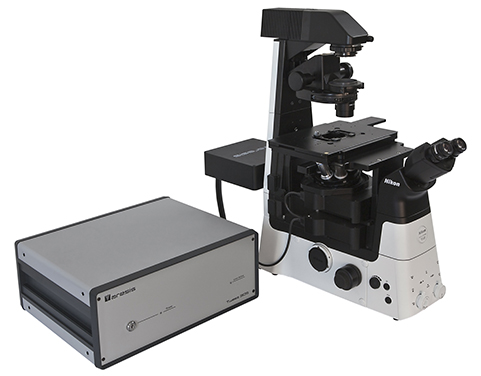
Introducing the Tweez 305, a cutting-edge optical tweezer system designed to deliver high precision and accuracy. Ideal for researchers across various fields, this complete turn-key device is fully compatible with Nikon inverted microscopes, thus adding contactless manipulation and force measurements to the existing standard and advanced microscopy techniques. Tweez 305 uses acousto-optic laser beam deflector technology (AOD) to simultaneously achieve high speed and subnanometre precision. Open hardware and software architectures allow flexibility, customisation, and future upgrades according to customer requirements. Aresis has designed Tweez 305 for demanding experiments, yet user-friendly and practically maintenance-free, allowing you to concentrate on your research instead of equipment.

slika1
slika2
Optical Unit
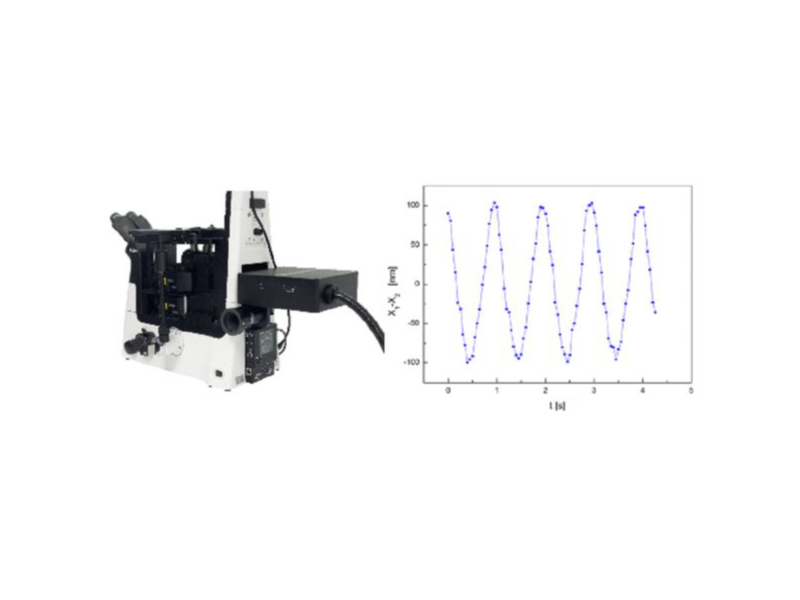
The heart of Tweez 305 optical tweezers is the optical unit, featuring all optical components, pre-aligned and packed in a compact, mechanically ultra-stable housing machined from a single aluminium block. This unique optical design, with its short optical and exceptional thermal and mechanical stability, ensures ultralow trap positional noise and drift and makes Tweez 305 ideal for measuring forces with sub-piconewton precision. The optical unit attaches directly to the microscope epi-port with the included mechanical adapter, creating a rigid assembly. Installation of the optical unit is quick and easy – it takes no more than a few minutes. The components within the Tweez 305 optical unit do not need any re-alignment or cleaning, ensuring years of trouble- and maintenance-free operation.
Main Unit
The brain of Tweez 305 optical tweezers is the main unit, housing the system electronics and laser. The highly configurable and robust hardware platform (Xilinx SoC FPGA) enables real-time generation of all control signals in the digital domain, offering unparalleled speed and precision. The sub-nanometer trap positioning at a 100 kHz trap-to-trap update rate makes Tweez 305 the fastest device on the market. Computer control supports long and complex trap patterns and movements, whereas simple manipulation can be performed quickly and intuitively by a computer mouse. The optional IO module provides external hardware synchronization, trap or piezo table position control, and adds programmable digital and analog IO control and synchronization channels. The active stabilized 5 W CW 1064 nm laser delivers ample power for generating hundreds of independent traps with excellent long-term stability (<0.1%/hour), yielding consistent and reproducible results even in long experiments.

tweez-305-main-unit-1

tweez-305-main-unit-2

tweez-305-main-unit-3
slika22
Tweez App
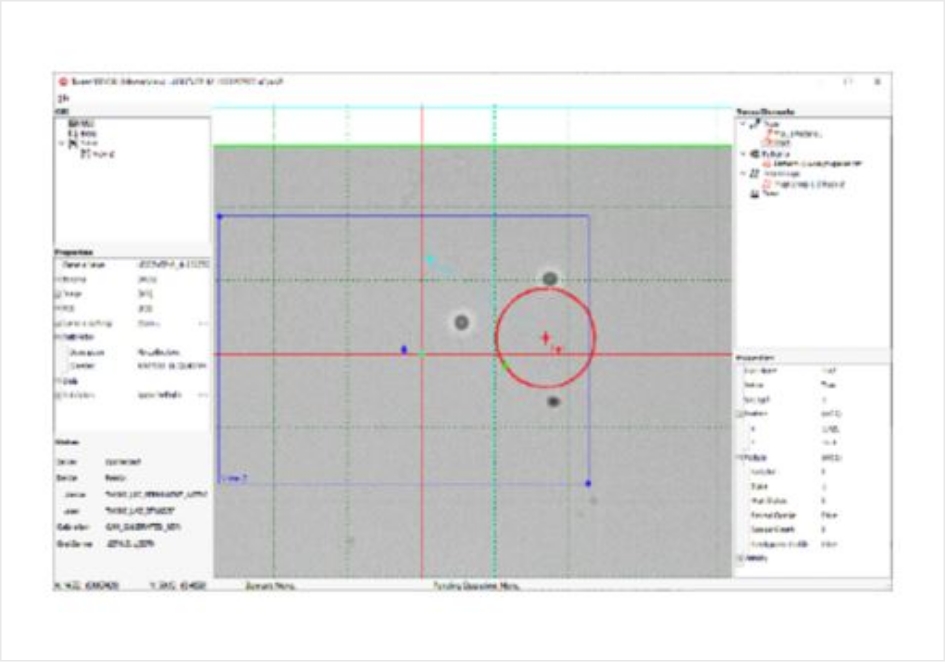
The face of Tweez 305 is the Tweez App, which makes Tweez 305 hardware truly valuable and easy to use. It comes ready and pre-configured for a wide range of optical tweezer applications, including advanced particle tracking routines for camera-based force measurements. Its modular design and embedded Python facilitate easy expansion of functionality, either by you or Aresis. Automated system housekeeping allows you to focus on your research without worrying about the experimental equipment. An intuitive user interface ensures a steep learning curve and straightforward system operation.
Camera-based force measurement module
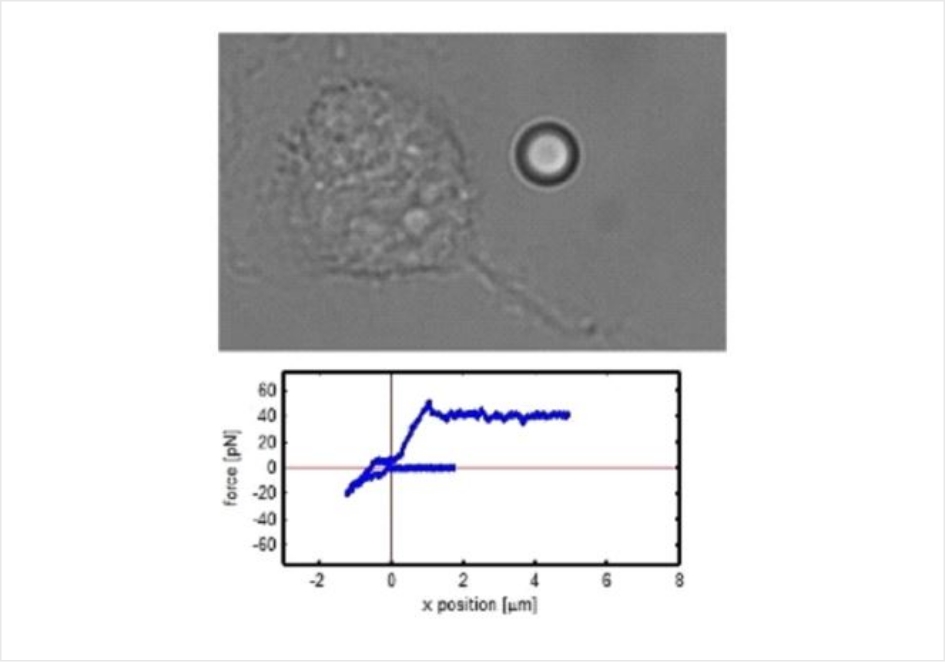
Tweez 305 features an integrated camera-based force measurement module uniquely designed to combine precise hardware-synchronized image acquisition with trap movement and powerful image processing. The module enables simultaneous measurement of forces on up to 20 particles in real-time, with a resolution better than 0.1 pN. An automated force calibration ensures precise and reproducible results every time. All optical signals for force measurement are collected through the microscope objective, making the method user-friendly and compatible with microfluidic chips, even thicker ones, or those lacking optical quality windows on both sides. The module provides live force information for quick insights during the experiment and records complete time-stamped video and trap data for offline analysis and archiving.
slika33
tweez-305-camera-support-1

tweez-305-camera-support-2
Camera compatibility
The Tweez 305 optical tweezer system can operate independently of a camera, with all trap movements and actions pre-programmed and executed by Tweez 305 hardware. However, a camera is essential for real-time manual manipulation, initial experimental setup, and camera-based force measurement.
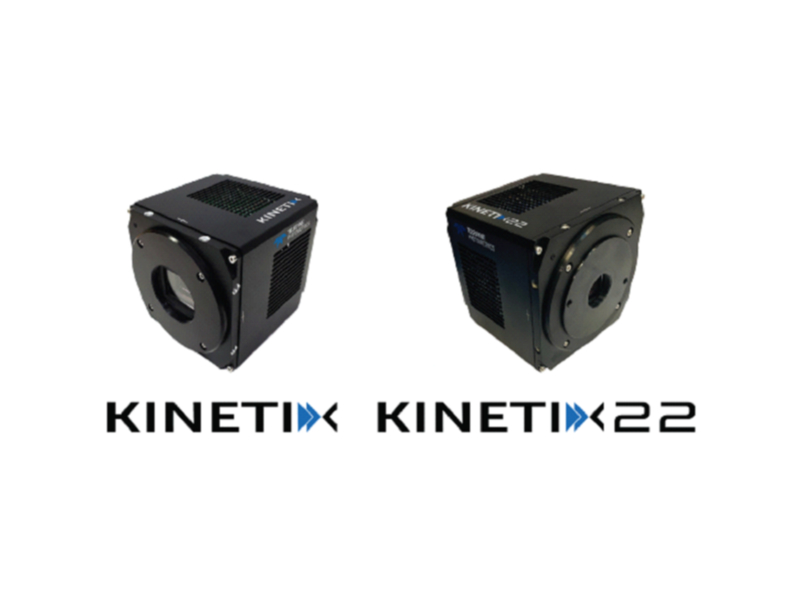
Tweez 305 system is standardly equipped with a Ximea camera, using a 3rd Generation Sony CMOS Pregius 20 MP, offering excellent sensitivity and speed for brightfield imaging. For low-light applications, such as fluorescence or TIRF, we recommend and support scientific CMOS cameras from Teledyne Photometrics Prime and Kinetix families.
System calibration
To maintain its precision, Tweez 305 occasionally requires system calibration, especially after changing the microscope objective. The user needs only to position the supplied calibration sensor above the microscope objective and start the automatic calibration procedure in the GUI. The calibration process takes less than a minute to complete. During the calibration, the system automatically measures the optical transfer function of all optical elements, including microscope objective and acousto-optic deflectors (AOD), across the entire working field. It then calculates a correction matrix to compensate for beam clipping on the objective and nonlinearities of AOD. Finally, the correction matrix is saved and used in signal generation routines, ensuring constant trapping intensity across the working field.

tweez-305-system-calibration

tweez-305-ghost-trap-elimination
Ghost trap elimination
All AOD-based optical tweezer system can generate spurious ghost traps at high trap-to-trap switching rates. To avoid this artifact, Tweez 305 employs a proprietary ghost trap elimination technique that significantly reduces ghost trap intensity to negligible level, even at the highest trap switching rates.
Compatibility
Tweez 305 is designed for seamless integration with Nikon microscopes. The Optical Unit’s mechanical components are carefully engineered to prevent protrusion into the lower epi-port space, ensuring compatibility with standard Nikon parts. The incorporation of Tweez 305 is thus compatible with a wide array of microscopy techniques, including brightfield, epifluorescence, confocal, and TIRF. A specialised variant of Tweez 305 can be mounted to a lower epi-port, ensuring compatibility with select third-party TIRF systems.

tweez-305-compatibility
Future-proof and sustainable design
Hardware evolves at a much slower pace compared to the rapid advancement in applications, as is best demonstrated by the longevity of essential components, such as lasers and microscope objectives. Recognizing the unpredictable nature of the experimental research, Tweez 305 is designed and built on a versatile and configurable hardware platform (Xilinx SoC FPGA), which facilitates complete signal processing and generation in the digital domain but also allows future upgrades and additions of new functionalities. Tweez 305 system hardware can adapt to new requirements by simply uploading a new configuration bitstream to the system. By incorporating high-quality and durable components, the product guarantees a long lifetime and usability, reducing the total cost of ownership and making a tiny contribution to a more sustainable world.